



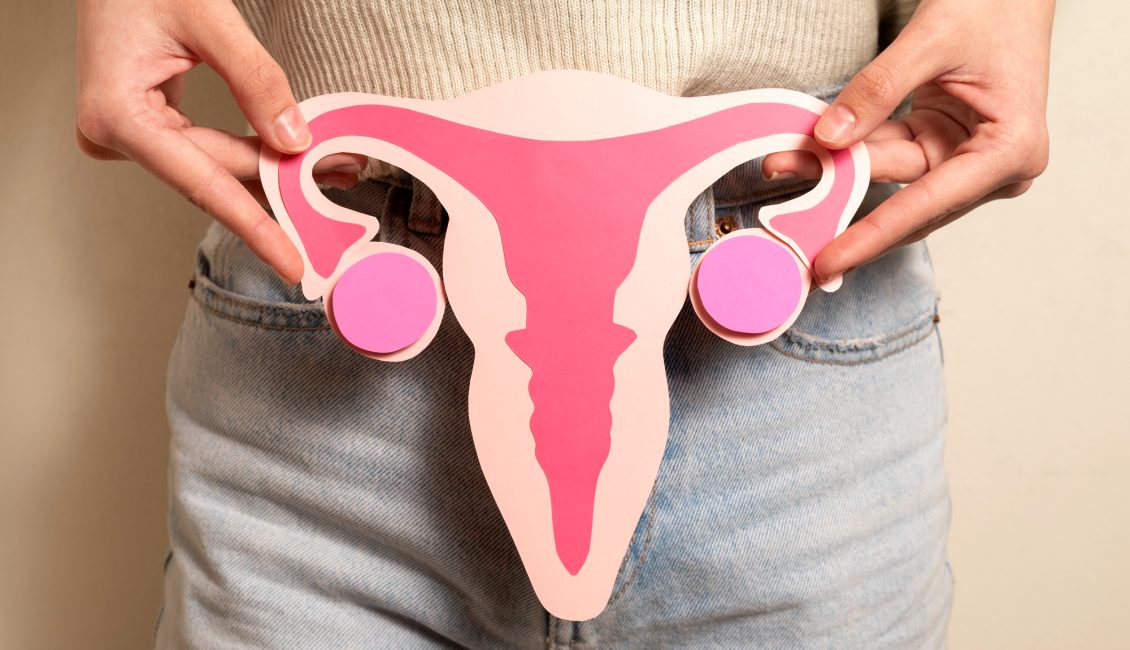
Aesthetic/plastic gynecology has been the fastest-growing field in the last decade or so. Its beginnings, as is typical in medicine, took place in the United States. In the early 2000s, California began to view aesthetic procedures of the intimate area as separate from plastic surgery, as plastic surgeons occasionally performed some of them, unheard of. Perhaps it was thanks to women themselves speaking up about their problems that gynecologists needed to pay more attention to the aesthetics and sexual needs of their patients. That’s why I believe we’re currently witnessing another sexual revolution. The first occurred in the 1960s and began with the bikini. This second revolution began when women stopped being ashamed of their needs and even started talking about them. The words “clitoris” and “orgasm” are no longer shameful and have even become somewhat fashionable. Nowadays, women aren’t talking about their partners’ pleasure, but their own. And they demand it. I believe they’re finally here. That’s why, in my opinion, this is a REVOLUTION. In Poland, the “trend” for this type of procedure began in 2012. Women learned that they no longer had to live with pain or lack of sexual pleasure because they had given birth to children or were simply born with a particular anatomy in their intimate area. It was also no longer a “secret” that women had orgasms and wanted to experience them. Consequently, women realized that if the feeling diminished or something “stopped working,” they could consult a specialist to have it repaired or improved. Even women in their 60s and 70s are seeking treatment for a “problem” they had struggled with their entire lives, and as soon as they learned they could change it, they did so.
The most commonly performed procedures are: reduction of the labia minora (labiominoroplasty), often combined with reduction of the clitoral foreskin (hoodoplasty), and plastic surgery of the vagina and perineum (vaginoperineoplasty).
Apart from these, plastic surgery of the labia majora (either their reduction or enlargement), removal of overgrown tissues around the anus (anoderma), liposuction of the pubic mound (liposuction) and other, various combinations of the above are also performed, although less frequently.
Surgical procedures
Plastic surgery (reduction) of the labia minora and the foreskin of the clitoris.
There are many techniques for this type of procedure, but the most commonly performed worldwide include the classic (edge, trim) and wedge. Others are, to a greater or lesser extent, modifications of the above, although sometimes they differ significantly, such as the fenestration method.
The first involves a linear cut of the labia minora, which achieves two goals: reducing their size and removing the often discolored labia minora. The longitudinal wound is usually closed with an absorbable, continuous intradermal suture..
The use of single transverse sutures is contraindicated due to the resulting scalloped scars (hence the name “scaloping”).
The second method is based on the assumption that the lip margin remains intact. The wedge appears as a triangle, with the base being the excised lip margin and the apex located in the crease between the labia minora and labia majora.
There are two types of this technique: the medial and posterior wedge resections. The former is still frequently used by plastic surgeons, but it has a fundamental drawback. Removing the middle portion of the lip removes the largest blood vessel in the lip—the middle artery. This carries a significant risk of wound dehiscence. However, the use of deepithelialization techniques in this technique allows for avoiding this complication. Posterior wedge resection involves cutting a wedge at the base of the lips, i.e., from the vaginal vestibule and perineum. With this type of wedge resection, the incision and subsequent suturing line run along the labial sulcus. This creates a longitudinal scar on the elongated organ. Unlike the previous procedure, it is invisible..
Both methods may require reduction of the clitoral foreskin or the skin folds running along the sides of the clitoris. Removal of these tissues is often necessary, and failure to perform this procedure is due to the fact that reduction of the labia minora leaves a protruding clitoris and foreskin resembling a penis (hence the term “penis-like shape”). Reduction of the clitoral foreskin is most often performed simultaneously with the labia minora reduction procedure and can be performed with a single incision (the “one-cut” or “linear Z” technique) or with separate teardrop-shaped incisions running along both sides of the clitoris. In this case, multiple individual sutures are acceptable, although the author prefers absorbable intradermal sutures..
Indications for the procedure:
- Aesthetic considerations
- The issue of pain when wearing tight pants or riding a bike
- Frequent inflammations in this area
- Difficulties in sexual intercourse
- And many others – the main person assessing the indications is the patient who does not want to continue living with this body type.
Contraindications:
- Vulvovaginal infection (active or within the last week).
- General infection such as flu, cold or herpes within the last 2 weeks
- Abnormal blood test results, especially blood count and coagulation tests
- Uterine bleeding of unknown origin or menstrual period (gynecological procedures can be performed after menstruation, but never before or during it)
Recommendations before the procedure
- Fasting for at least 6 hours before surgery (not required for local anesthesia).
- Blood tests: complete blood count, coagulation system, blood type, electrolytes, creatinine and TSH (in the case of local anesthesia only the first two).
- Hair removal from the pubic mound to the anus.
Post-treatment recommendations
- Perineal hygiene – Tantum Rosa 1 sachet/1 liter of water, Octanisept
- Ice compresses 5-6 times a day for 30 minutes (first few days until the swelling subsides).
- Applying antibiotic ointment twice a day (the author suggests Triderm followed by micronized hyaluronic acid gel, e.g. Mucovagin)
- No underwear allowed for 7-10 days
- Bathing is prohibited, only showers and sexual intercourse is prohibited for 6 weeks.
- Postoperative check-up after 6 weeks
Vaginoplasty and perineoplasty
Briefly speaking, the procedure involves narrowing the vagina, “closing” its entrance, and “lifting” the perineum. The goal is to improve sensation during sexual intercourse, but not only that. After childbirth, often after several births, the vagina and the muscles surrounding it (the muscles of the rectovaginal fascia) relax and widen. Women complain of a feeling of looseness and a lack of sensation during intercourse. Furthermore, distressing symptoms of postpartum vaginal and perineal damage include frequent vaginal infections associated with the so-called “gaping vulva” (the vaginal entrance is open and the interior is visible), frequent abrasions, and discomfort in daily life. However, the main problem is the sexual aspect, which significantly impairs quality of life.
Technically, the procedure involves separating the mucosa of the posterior vaginal wall from the rectovaginal septum and retracting the rectum. The surgeon then sutures the muscles of the rectovaginal fascia and removes the excess vaginal mucosa. The vagina is sutured medially with a continuous suture. Next, the perineal skin is cut in a diamond shape, and single sutures are placed on the tendon-like center, lifting the perineum and “closing” the vaginal vestibule, which serves as its entrance. The perineal skin is sutured with a continuous suture, intradermal, or single sutures. A seton soaked in an antibacterial agent is left in the vagina for 24 hours. This procedure is performed to reduce the risk of hematoma formation in the rectovaginal space.
All sutures used are absorbable.
Indications for the procedure:
- Symptoms of a “wide vagina” (lack of sensation for the partner, releasing “gas” from the vagina during intercourse and also during ordinary physical activity, water leaking from the vagina after getting out of the bathtub or swimming pool, etc.)
- Vaginal width > 3-4 fingers of the examiner
- Decreased self-esteem due to the appearance of the vulva
- Frequent inflammations
Contraindications to the procedure
These are the same as those described above. Additionally, the following should be mentioned:
- Vaginal width <3 fingers of the examiner
- Further maternity plans (this is relative, because after the procedure you can get pregnant and only natural childbirth is contraindicated)
- Severe atrophy (loss) of the vaginal mucosa (improvement of its condition is required before the procedure)
Recommendations before the procedure
They are identical to those described above, except for one additional issue. Imagine having to pass a stool immediately after surgery. This would be very unpleasant and painful. Therefore, the author recommends a light, liquid or pureed diet the day before surgery, and an enema in the evening. This procedure eliminates the need to pass a stool for several days and is sufficient to avoid unpleasant sensations immediately after the procedure.
Post-treatment recommendations:
They are also identical to the above except for the need to use anti-inflammatory vaginal tablets (the author suggests Gynalgin and then Mucovagin globules).
Plastic surgery of the labia majora
The procedure is performed on women who complain of excessively prominent labia majora, which look like testicles in a bikini. Patients sometimes find it very bothersome when their underwear forms a characteristic camel toe shape. These symptoms cause significant embarrassment. Another reason cited by women for seeking surgery is laxity of the skin on the lips, which often occurs after significant weight loss, when the skin on the entire body becomes saggy and excessive. In such cases, conservative treatments are insufficient, and surgical techniques should be resorted to.
The most popular and most frequently performed technique involves a longitudinal excision of a section of the lip skin. One incision line runs along the lip crest, and the other runs below it, along the crease between the labia minora and labia majora, connecting at the crest and base in a spindle shape. After removing the skin fragment and the appropriate amount of fat tissue, and adapting the skin edges, the wound is sutured with a continuous intradermal suture. As with the previous procedures, only absorbable sutures are used..
Indications for the procedure:
- Oversized, overly emphasized lips majora
- Sagging skin of the lips
Contraindications are identical to those for the previously described procedures.
Pre- and post-operative recommendations are similar to those for labia minora reduction.
Removal of hypertrophic anoderm
A very common phenomenon after pregnancy and childbirth is the appearance of polypoid growths on the mucosa surrounding the external anal opening, known as anoderma. These are remnants of hemorrhoids, which often accompany pregnancy. According to patients, the main complaint is aesthetic. Women feel embarrassed by their partner, and the only way to get rid of this embarrassing issue is to surgically remove it. From a technical perspective, the procedure can be performed in two ways. The first is a kind of “burning” with a laser. The wound is not closed with any stitches, but the burn area is sometimes quite large and can be painful in the postoperative period. The second method involves excision of the protruding polypoid formations and the application of single, absorbable stitches. Postoperative discomfort is usually less severe, but not always. According to the author, both methods are effective and can be used depending on the surgeon’s experience and the minimally invasive surgery equipment..
The indication for this procedure is anoderm hyperplasia and the patient’s request for its removal. The principles of hygiene and pre- and postoperative care are the same as for vaginal and perineal plastic surgery. In this case, special emphasis should be placed on hygiene, especially during the first 2-3 days. After any gas, not just after bowel movements, the surgical area should be disinfected, for example, with Octanisept.
Liposuction of the pubic mound
It sometimes happens that despite the scant amount of fat tissue in the lower abdomen, the mons pubis is richly endowed with it. A woman suffering from this condition complains of a feeling of embarrassment when wearing tight underwear, a bikini, or when naked when she sees this part of her body “protruding” above the lower abdomen. As with any other case of excessive fat tissue, the best method in this case is liposuction, or suction. This is performed in two stages. First, the skin is anesthetized before incision to insert a cannula, through which Klein’s solution, which has an analgesic and vasoconstrictor effect, is injected into the adipose tissue. The skin incision and insertion site can be located above the mons pubis or at its lateral edges, above the groin.
The second stage of the procedure involves suctioning out the previously injected fluid along with the fatty tissue. Technically, this is accomplished by the operator inserting and withdrawing a cannula connected to a vacuum, holding it in one hand and positioning the other hand appropriately, as if to subject the area from which the fat is to be removed.
After appropriate processing, the resulting material can then be used for transplantation to another area of the body. These procedures will be described later in this paper.
The only indication for the procedure is the patient’s will, and contraindications to its performance will be abnormal blood test results or skin lesions in this area.
In the postoperative period, it is very important to ensure continuous pressure on the mons pubis for at least a month. Various types of elastic bandages or bandaging can be used. Unfortunately, this area is difficult to apply pressure due to its location at hip level, and these cannot be immobilized by rubbing. A good approach seems to be applying multiple gauze pads to the mons pubis and wearing tight underwear. This approach is often very effective. Only the area of skin lacerations requires increased hygiene, which usually heals within the first 2-3 days. Octanisept seems to be a sufficient disinfectant.